.png?width=159&height=72&name=Curtis%20Power%20Solutions%20(RGB).png)

Reliable backup depends on more than just the generator itself. Components like filters, belts, hoses, cooling-system components, and electrical parts all play a crucial role in keeping the mtu generators operating as intended. Knowing which mtu generator parts should be commonly inspected and replaced can make your maintenance planning easier and help prevent avoidable downtime. This guide by Curtis Power Solutions will discuss some common mtu generator components that require replacement and help you choose genuine replacement parts.
What Are mtu Generator Parts?
mtu Generator Parts are the individual engine, fuel, cooling, electrical, control, and maintenance components that are used to keep the mtu generators operating reliably.
Depending on the generator model and application, these can include routine service items such as oil and fuel filters as well as belts, hoses, gaskets, sensors, electrical components, and Engine Parts.
Common mtu Generator Components
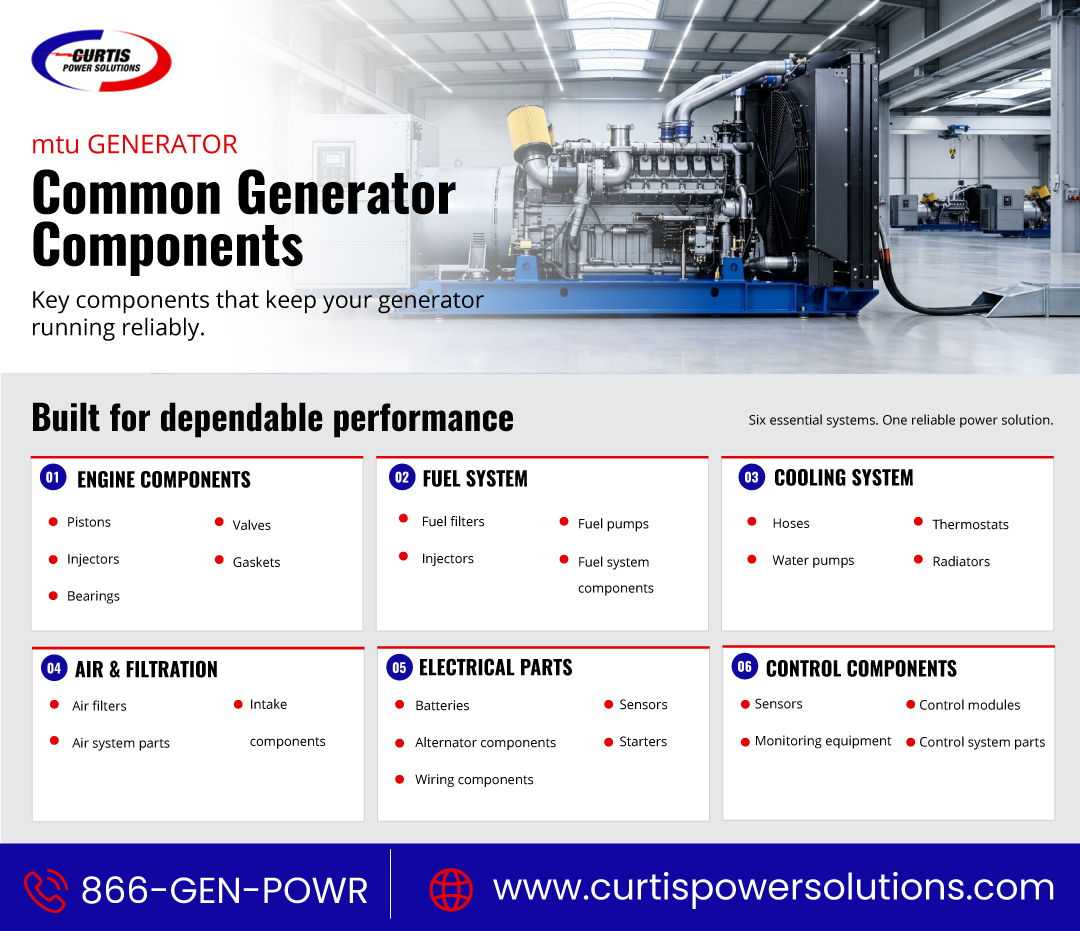
mtu generators combine several systems that work together to produce and manage electrical power. Common component groups for these gensets include:
-
Engine components - pistons, bearings, injectors, valves, gaskets, and other engine parts.
-
Fuel-system components - fuel filters, pumps, injectors, and related components.
-
Cooling-system components - hoses, thermostats, water pumps, radiators, and associated parts
-
Air and filtration components - air filters and related intake components.
-
Electrical parts - batteries, sensors, alternator components, starters, and wiring-related parts.
-
Control components - sensors, control modules, monitoring equipment, and other control-system components.
But not every generator component needs to be replaced during routine maintenance. Some should be inspected regularly and replaced only when wear, damage, testing, or manufacturer guidance indicate a need.
What mtu Generator Parts are Commonly Replaced?
Your replacement requirements can vary depending on the generator model and its operating conditions. But there are several categories of components that commonly appear in Planned Maintenance and repair work, these include:
Filters
Filters remove contaminants from engine oil, fuel, and intake air, helping protect critical components. As they gradually collect dirt and debris during operation, it can restrict flow and reduce their effectiveness.
Belts and Hoses
Belts transfer mechanical power to engine accessories, while hoses carry coolant and other fluids. Heat, vibration, pressure, and ageing can cause them to crack, stretch, harden, or deteriorate.
Engine and Fuel System Components
These components support combustion, fuel delivery, and the conversion of fuel energy into mechanical power. They wear over time due to high temperatures, pressure, friction, and repeated mechanical loads. Contamination or poor fuel quality can also accelerate this deterioration.
Cooling System Parts
Cooling-system components circulate coolant and remove excess heat from the engine. Pumps, hoses, thermostats, and other related parts can deteriorate due to heat, pressure, vibration, corrosion, or coolant contamination. This can contribute to overheating and serious engine damage.
Electrical and Control Components
These parts help with the starting, monitoring, protection, and controlling of the generator. Over time heat, vibration, moisture, corrosion, electrical loading, and ageing can affect their performance. If you notice fault codes, starting problems, or abnormal reading, it may indicate that a component needs testing or replacement.
Gaskets, Seals, and Other Replacement Components
Gaskets and seals prevent fluids and gases from leaking between connected components. Repeated heat cycles, pressure, chemical exposure, ageing, and disassembly can cause them to deteriorate over time.
The replacement intervals for these mtu generator parts vary by the component, engine model, operating hours and conditions. You should always follow the applicable maintenance schedule and mtu Technical Documentation when it comes to their upkeep.
How mtu Generator Parts Support Reliable Generator Performance
Generator reliability depends on the condition of the individual components that support the generator operations. Replacing filters and other routine maintenance parts at the appropriate intervals can help protect the equipment, while timely replacement of worn or failed components can reduce the risk of any unplanned downtime.
This planned approach to Operations and Maintenance of mtu generator parts can therefore work to support the long-term reliability of your power-generation system. You should use the generator model, engine information, part numbers, and applicable technical documentation to select the right replacement.
How to Choose the Right mtu Generator Parts
Choosing a replacement part for mtu generators is not simply a matter of finding something that looks similar. The component needs to be compatible with the specific generator and application.
Consider the following factors when selecting the replacement parts for your generator:
1. Confirm the Generator and Engine Model
Start by identifying your generator set and the mtu engine model. Record the relevant model and serial information for this. It will help you narrow down the correct component and reduce the risk of ordering a part intended for a different engine configuration.
2. Check Part Numbers and Compatibility
Wherever possible, use the existing part number, equipment documentation, or manufacturer parts information to identify the required component. You should check its compatibility against the specific engine and your generator configuration rather than relying only on general descriptions.
3. Consider Genuine and Approved Replacement Parts
Genuine or manufacturer-approved parts can ensure confirmed compatibility and may be particularly important where manufacturer specifications, warranty requirements, or system integration are involved.
However, the right choice can depend on the application, availability, service requirements, and the quality of the alternative component.
4. Match Parts to the Generator's Operating Conditions
A generator operating continuously in a demanding environment may have different maintenance requirements from one that’s used occasionally for standby power. That’s why factors like operating hours, load, ambient temperature, dust, humidity, and other site conditions can affect component wear and its maintenance needs.
5. Work With an Experienced Generator Parts Supplier
A knowledgeable supplier like Curtis Power Solutions can help you identify parts using the generator and engine information, maintenance requirements, and existing component details. This can be particularly useful when you’re dealing with older equipment, less common components, or repairs where the correct part is not immediately obvious.
Genuine mtu Parts vs. Aftermarket Generator Parts
Both genuine and aftermarket components can be available for generator maintenance and repair. The important consideration is whether the replacement part is appropriate for the equipment and meets the required specifications.
You can identify the right replacement part by considering:
Compatibility
The replacement part must be compatible with the particular mtu engine and generator configuration. Genuine parts can simplify this process, while aftermarket components should be carefully checked against the applicable specifications and part requirements.
Quality and Reliability
Component quality can affect service life and generator reliability. This is especially important for parts involved in fuel delivery, lubrication, cooling, engine operation, or electrical protection.
Rather than comparing the generator parts based on price alone, you should also consider its specifications, quality controls, application suitability, and the supplier reputation.
Warranty and Manufacturer Requirements
Depending on the generator, application, and service agreement, manufacturer requirements may influence which replacement components are appropriate. You should review the relevant documentation and warranty conditions before choosing a non-genuine replacement part.
Long-Term Maintenance Considerations
A lower upfront purchase price does not necessarily represent the lowest overall maintenance cost. You need to consider other long-term factors like the expected service life, installation requirements, downtime risk, and future availability of the parts.
When Should mtu Generator Parts be Replaced?
Routine Maintenance Parts should generally be replaced according to the maintenance schedule for the specific engine and generator set. Other components may be replaced when inspection identifies deterioration, when diagnostic testing indicates a problem, or when a component reaches the end of its expected service life.
Signs that indicate a component may require attention can include:
-
Visible cracking, leaks, corrosion, or deterioration
-
Unusual engine or generator performance
-
Abnormal temperatures or pressures
-
Warning or fault indications
-
Reduced starting or operating performance
-
Excessive vibration or unusual noise
-
Evidence of contamination or restricted filtration
Following a planned maintenance program can help you identify any developing component problems before they result in an unexpected shutdown.
Where to Buy mtu Generator Parts
When you’re sourcing mtu generator parts, start with the generator's engine model, serial information, existing part number, and maintenance requirements.
A specialist generator parts supplier can help you confirm compatibility and source components for routine maintenance or repair work. This can be particularly valuable when the generator is part of a critical power system where incorrect parts or extended downtime can have operational consequences.
At Curtis Power Solutions, we provide access to generator parts and maintenance support for a range of power-generation applications. For specific mtu requirements, you can also review our mtu Resources and Services or Contact Curtis Power Solutions for any support on identifying the appropriate components for your genset.
Frequently Asked Questions
1. What parts are commonly replaced on an mtu generator?
The commonly replaced mtu generator parts include the routine maintenance items, cooling and fuel systems, and other internal engine components.
2. How do I find the correct mtu generator replacement part?
To find the correct mtu generator replacement part, check the generator model, engine information, part numbers, and applicable technical documentation.
3. Are genuine mtu parts better than aftermarket parts?
Genuine mtu generator parts are better than aftermarket parts for their reliability, precise engineering, and the long-term safety of your engine.
4. How often should mtu generator parts be replaced?
mtu generator parts should be replaced based on the maintenance schedule for the specific engine and generator or when inspection identifies deterioration, or a component reaches the end of its expected service life.
5. Can a generator service provider help identify the parts I need?
Yes, a generator service provider can help you identify the parts you need based on the generator’s model data or the engine's dedicated identification tag.